Section 09
Statistical Annex — 2010
Throughput, traffic, and ranking tables for the year under review.
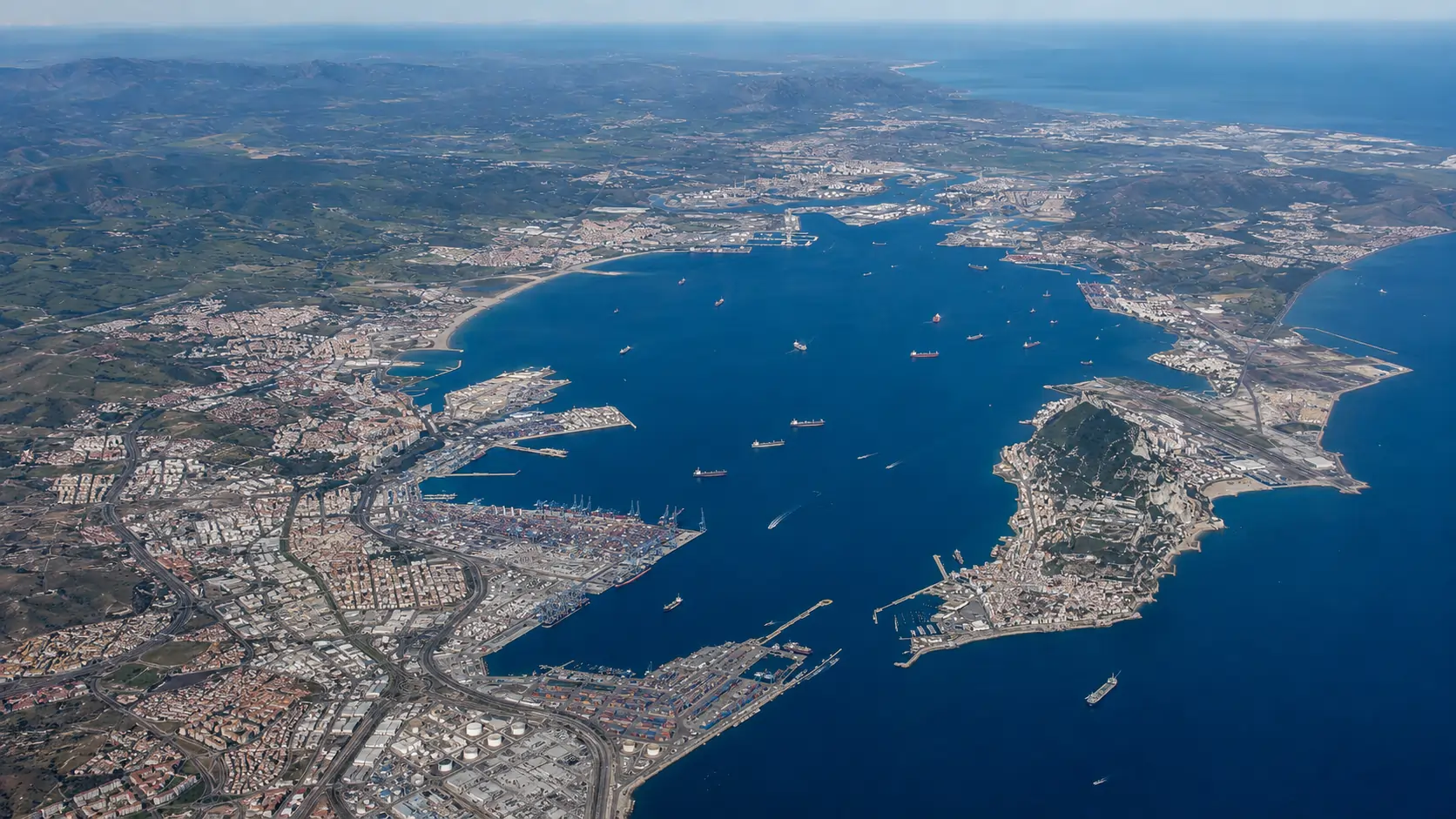
This Statistical Annex preserves the headline operating figures recorded by the Autoridad Portuaria Bahía de Algeciras (APBA) for the calendar year 2010, the year under review in this 2011 Edition of the Handbook. The Port of Algeciras statistics 2010 presented here are reproduced as published, with units, ranking citations, and source attributions consistent with the original record. Subsequent revisions to these figures issued by APBA or by industry ranking bodies are not reflected here; readers requiring revised data should consult the originating sources.
Headline throughput, 2010
| Metric | Value | Source |
|---|---|---|
| Total cargo throughput | ~70.0 M tonnes | APBA |
| Total containers handled | 2.81 M TEU | APBA / WSC |
| Container trade volume rank · Europe | 7th | World Shipping Council |
| Container trade volume rank · World | 28th | World Shipping Council |
| Cargo tonnage rank · Europe | 9th (2008 ref.) | AAPA |
| Cargo tonnage rank · World | 57th (2008 ref.) | AAPA |
| Bunker fuel delivered | 4.0+ M tonnes | APBA |
| Passenger movements · Strait crossings | ~6 M pax | OPE / APBA |
| Vehicle movements · Strait crossings | ~1.5 M units | APBA |
Container traffic profile
Containerised cargo accounts for a substantial share of total throughput in monetary terms but a more modest share by tonnage. Containers handled at Algeciras during 2010 broke down approximately as follows: transshipment traffic — containers discharged from one vessel for onward loading to another vessel within the same port — accounted for the substantial majority of TEU movements, typically in the range of 85 to 90% of the total. The remaining 10 to 15% represented import/export movements connecting the port to its terrestrial hinterland.
The Maersk Line and 2M Alliance services, calling at APM Terminals Algeciras, accounted for the largest individual share of throughput. Asian-Mediterranean and Asian-North European services dominated the trade lane mix, with secondary contributions from trans-Atlantic and Mediterranean intra-regional services.
Liquid bulk · 2010
| Category | Approximate tonnes |
|---|---|
| Crude oil imports (Cepsa) | ~12.0 M |
| Refined product exports (Cepsa) | ~11.5 M |
| Bunker fuel delivered | ~4.0 M |
| Other petroleum products (EVOS, etc.) | ~2.0 M |
| Liquid chemicals | ~1.5 M |
Dry bulk · 2010
| Commodity | Approximate tonnes |
|---|---|
| Coal imports (Endesa Los Barrios) | ~2.5 M |
| Iron ore and metallurgical inputs (Acerinox) | ~1.8 M |
| Cement and construction materials | ~0.5 M |
| Other dry bulks (grain, fertiliser, etc.) | ~0.3 M |
European container port ranking · 2010
| Rank | Port | Country | TEU |
|---|---|---|---|
| 1 | Rotterdam | NL | 11.15 |
| 2 | Antwerp | BE | 8.47 |
| 3 | Hamburg | DE | 7.90 |
| 4 | Bremerhaven | DE | 4.87 |
| 5 | Valencia | ES | 4.21 |
| 6 | Felixstowe | UK | 3.42 |
| 7 | Algeciras | ES | 2.81 |
| 8 | Gioia Tauro | IT | 2.85 |
| 9 | Le Havre | FR | 2.36 |
| 10 | Barcelona | ES | 1.93 |
Figures from World Shipping Council "Top 50 World Container Ports" series. Rankings include both EU member states and adjacent non-EU European ports for the purpose of this table.
Cargo composition · 2010 share
- Containerised cargo — approximately 41% of total tonnage; the share is somewhat lower than the TEU share because container average weight at Algeciras is comparatively light, reflecting the transshipment character of the trade.
- Liquid bulk — approximately 44% of total tonnage; the largest individual cargo class by weight, reflecting the Cepsa refinery operation and the bunker fuel trade.
- Dry bulk — approximately 8% of total tonnage; principally coal and metallurgical inputs.
- RoRo (excluding accompanied ferry passengers) — approximately 4% of total tonnage.
- Breakbulk and general cargo — approximately 3% of total tonnage.
Editorial Note · 2026
By the 2020 reporting year, the Port of Algeciras statistics showed headline throughput risen to approximately 107.3 million tonnes annually and 5.1 million TEU (figures published by APBA). The container TEU figure represents an increase of approximately 80% from the 2010 baseline. The cargo mix has shifted modestly toward containerised throughput as a share of total, and bunker fuel volumes have evolved in response to the IMO 2020 sulphur cap. Readers seeking comparable data for years subsequent to 2010 should consult APBA's annual statistical bulletins.