Section 05
Maritime Services
Pilotage, towage, mooring, bunkering, and waste reception — the working ecosystem of the port.
A working commercial port is supported by an array of Algeciras maritime services that operate in the spaces between vessels, terminals, and the regulatory authorities. Pilotage, towage, mooring, bunkering, waste reception, and ship supply together constitute the working environment in which container handling and cargo operations take place. The Port of Algeciras supports a full range of these services through licensed operators, in arrangements that conform broadly to Spanish national port practice and European Union regulation.
Pilotage
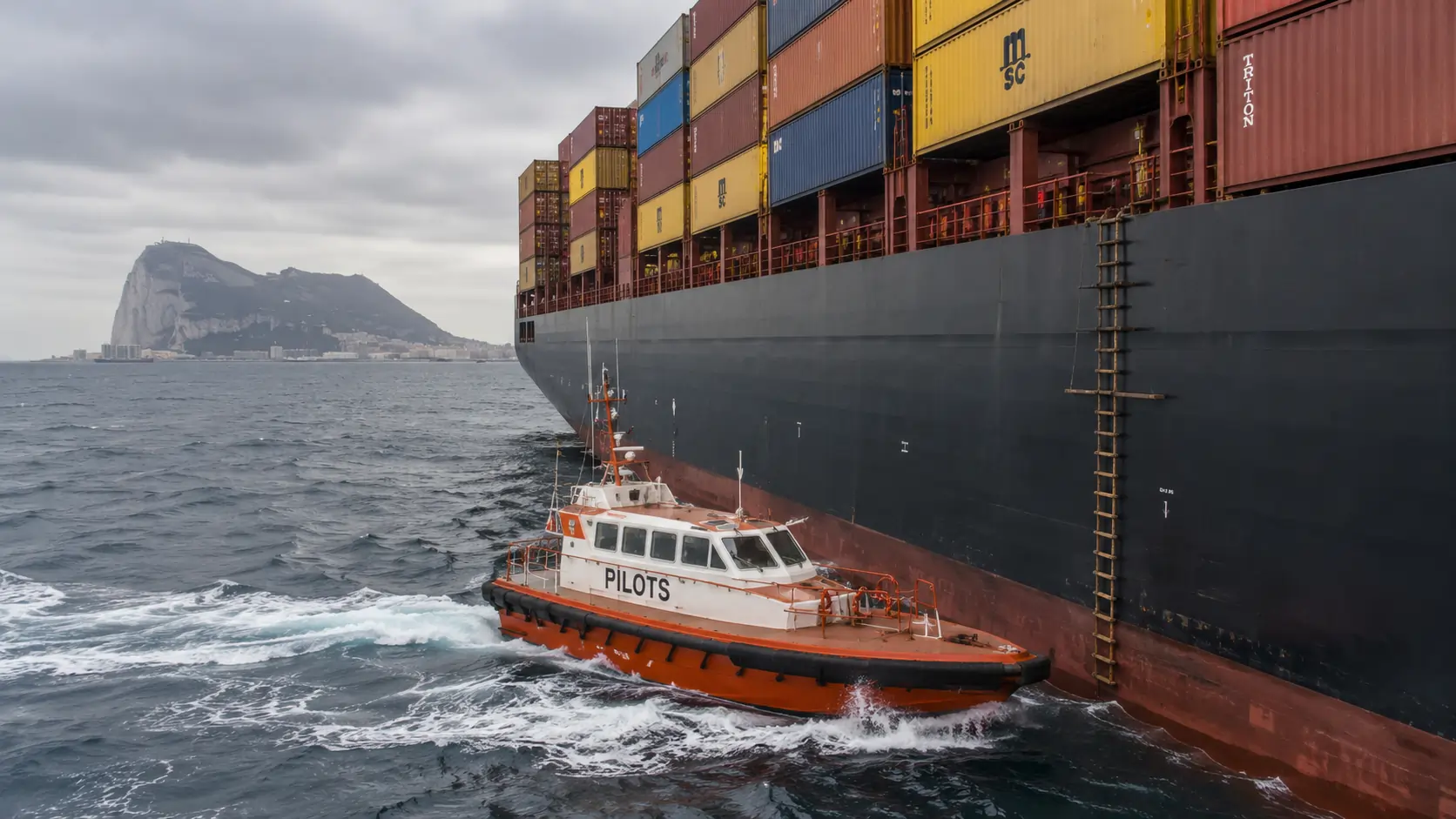
Pilotage at the Port of Algeciras is compulsory for all merchant vessels of 500 GT and above. The pilot service is provided by the Corporación de Prácticos del Puerto y Ría de Algeciras, a private corporation operating under a service concession from the Port Authority (APBA). Pilots board incoming vessels at a designated station to the south of Punta Carnero, approximately three nautical miles offshore of the bay entrance; outbound vessels disembark pilots at the same station.
The pilot complement at the time of publication numbered approximately twenty practising pilots, supplemented by trainee pilots completing certification. The pilots' vessels — fast pilot launches based at the historic port and at Isla Verde — operate twenty-four hours per day, year-round, with operations suspended only during the most severe Levante wind conditions when boarding becomes unsafe.
Towage
Towage services at the port are provided by two licensed operators: Boluda Towage and Salvage (a Spanish national operator with concessions across multiple Iberian ports) and SAR Remolcadores (a regional operator with Algeciras as its principal base). The combined tug fleet at the time of publication numbered fourteen units, including conventional tractor tugs, ASD (azimuth stern drive) tugs, and reverse-tractor tugs of varying bollard pull capacities.
Towage assistance is compulsory for vessels above certain size and manoeuvring complexity thresholds, as specified in the port byelaws. The largest vessels — particularly the ultra-large container vessels calling at TTI Algeciras — typically require three tugs for berthing and unberthing operations; smaller vessels require one or two depending on prevailing wind and operational conditions.
Bollard pull, in context
Bollard pull is the standardised measure of a tug's pulling force, measured in tonnes (or kilonewtons in modern usage). A bollard pull of 60 tonnes is conventional for harbour towage; the largest tugs at Algeciras exceed 80 tonnes bollard pull, sufficient to handle ULCVs in adverse wind conditions.
Mooring and unmooring
Linehandling operations — the physical work of passing, securing, and casting off vessel mooring lines — are conducted by the licensed mooring corporation Amarradores del Puerto de Algeciras. Mooring is performed by trained linehandlers operating from dedicated mooring boats and from the quayside. As with pilotage and towage, the service operates twenty-four hours and is integrated with the port's vessel movement schedule.
Bunkering — among the largest Mediterranean operations
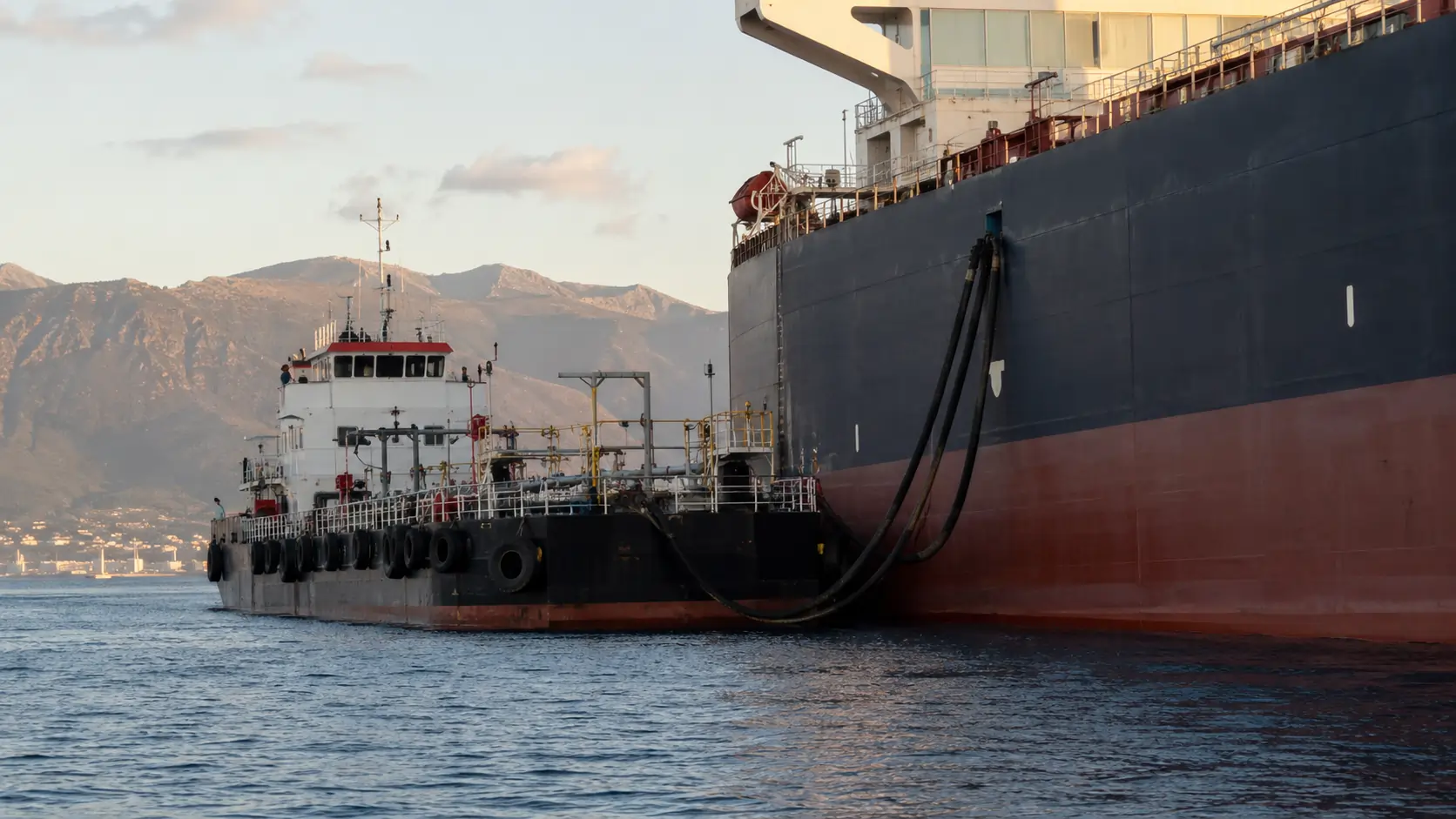
The Port of Algeciras is one of the principal bunkering ports of the Mediterranean basin, vying with Gibraltar across the bay for the dominant share of Mediterranean bunker fuel supply. Total bunker fuel deliveries at Algeciras during 2010 exceeded four million tonnes, comprising heavy fuel oil (HFO), marine gas oil (MGO), and a modest but growing share of low-sulphur fuel oil products required by vessels entering EU Sulphur Emission Control Areas (SECAs).
Bunkering is conducted predominantly by barge — bunker barges receive fuel from shore-side terminals (Cepsa, EVOS) and deliver it to vessels at the container berths, ferry terminals, or designated anchorages within the bay. Ship-to-ship bunker transfers conducted at anchor account for the substantial majority of total bunker volume; alongside bunkering at the quay accounts for a smaller share, conducted in parallel with cargo operations to minimise vessel port time.
Waste reception and MARPOL compliance
Under the International Maritime Organization's MARPOL Convention (Annexes I, II, IV, V, and VI), and the corresponding European Union Port Reception Facilities Directive, the Port of Algeciras is obliged to provide adequate reception facilities for ship-generated waste and cargo residues. The port supports licensed operators offering reception of oily waters and sludges (Annex I), noxious liquid substance residues (Annex II), sewage (Annex IV), garbage (Annex V), and exhaust gas cleaning system residues (Annex VI).
Reception is provided at the quayside on advance notification, or by service barge for vessels at anchor. The licensed operators include both Spanish national waste management firms and specialised port waste contractors. The system operates under a no-special-fee basis for the most common waste streams: vessels pay an indirect fee included in port dues, and may discharge reasonable quantities of waste without further charge.
Ship supply and provisioning
Ship chandlery services — provisioning of vessels with consumables, spare parts, technical supplies, and crew necessities — are offered by approximately fifteen licensed ship suppliers based in Algeciras. The port's proximity to the industrial hinterland of the Campo de Gibraltar permits competitive sourcing of most consumables, and the chandlers maintain warehouse stocks of the standard fittings and supplies required by merchant vessels of all classes.
Ship repair and dry docking
Heavy ship repair capability at the Algeciras complex is limited. The Crinavis basin retains a graving dock of moderate capacity, used principally for tug, ferry, and small commercial vessel repairs. Vessels requiring full dry docking typically proceed to Gibraltar, where the Gibdock facility offers larger graving docks, or to Cádiz, where the Navantia yards conduct major ship repair and conversion work. Afloat repair, machinery work, and steel renewal of more limited scope are conducted at Algeciras berths by visiting repair contractors.